Tuesday, August 14, 2018

July and Winged Things

Black Swallowtail on butterfly bush
Looking at NOAA's National Climate Report for July 2018, we didn't fare too badly at Bean Hill. In the contiguous U.S., the average high temperature was 1.9⁰ above the 20th Century average. Ohio's overall high for the month was above average. Despite a scary too-hot start to the month (the first five days our highs ran 90-93⁰ which were 8-10⁰ above normal) with only a trace of rain, by July 6 things dramatically improved. Thankfully, there were only two more 90⁰ days, and two "almost" days (89⁰). We ended up with sixteen of the month's highs being slightly below normal, as were more than half of the month's low temperatures. Bean Hill's average high for July was one degree below the historic average, and the average low was 2.4⁰ below the historic average. Rainfall was down; almost 3/4" below the month's historic average, but we've had a lot of rain during the previous months, so at this point, we're not part of the 34.1% of the nation experiencing drought. That percentage, by the way, is up from 29.7% at the start of the month.

We worried about the absence of bees since May so we added a tiny garden around the base of a central bird-feeding station, packed with plants approved by butterflies, bees, and hummingbirds: Liatris, butterfly weed, echinacea, monarda, sunflower, thyme, borage. I doubt that little patch of pollinator-heaven is responsible, but there have been lots of bees and butterflies in the area this month, and a fair number of hummingbirds. We also introduced seventy-five leafcutter bees this month. Like the mason bees, they're tiny native bees, so not as readily seen as their larger kin.

Monarch on common milkweed

Leafcutter bee (thanks to Pinterest for photo)
 
Yellow Swallowtail on pincushion plant

Swallowtail-to-be on fennel (their favorite!)


Echinacea and heliopsis

Bull thistle aka common thistle

Common milkweed


Bumblebee on white lavender

Pollen-laden honey bee on echinacea


Tuesday, July 3, 2018

A Green and Soggy June

What a difference a month makes:
Photo of bottle bush on May 20...
June's average high was 81.5⁰; the historic average in 82⁰. So daytime temperatures were normal for the month. However, twenty-one nights had above average temperatures; eleven of those were 10-14⁰ above normal. The average low for this June was 2.4⁰ higher than the historic average. The real story was the rain. It rained, as it's done several times so far this year, too often and too much. June's average rainfall amount in Central Ohio is 4.08" but this year 6.79" were recorded. We were lucky, though. Several parts of Ohio received almost 8" during the month. 


...And on June 30


It's little wonder that everything, even the weeds, are growing like weeds. Grass mowing is never-ending, but finding a time when things aren't too wet to mow is tricky. I've never seen so much crabgrass in the gardens. I've dug out clumps of crabgrass that were a foot in circumference! The upside is that everything is lushly green, and the perennials are putting on a beautiful display, especially the daylilies.


I noted last month the absence of bees, and I'm sorry to say that continues. I've seen no more than three honey bees so far this season. I've been seeing some large bumble bees since May, but still too few. I know our mason bees were busy, which is comforting, and there's evidence that leaf-cutter bees are in the neighborhood. Several kinds of butterflies and fritterlies are around, which is also comforting, and there are lots of the tiny hoverflies (see July 2017 blog) doing their best to pollinate everything. 

The lack of bees flying all around the coneflowers makes me sad. I've already decided to invest in a much larger number of solitary bees next spring than we've done so far. I really urge you to consider making an investment in solitary bees, too. Remember, these are truly gentle bees and you don't have to worry about being stung, much less swarmed. I'll remind you next spring. I might even nag.


Four lovely daylilies and one rain-soaked bee balm flower


Wednesday, June 20, 2018

May--Too Hot to Handle

By mid-May, looking at the statistics I'd been keeping here at Bean Hill, I predicted we were going to see a record-setting month. I really hoped I'd be proven wrong. I wasn't.
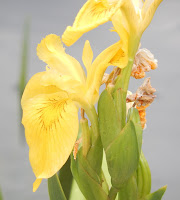
Water iris
While no new daily record highs were set in our immediate area, overall this was the hottest May ever recorded for Central Ohio. Throughout the lower-48, it was the hottest May since the Dust Bowl year 1934. On May 30, it was a reasonable 84⁰ here after five straight days of upper 80's and lower 90's--July and August temperatures--but that day 1,900 U.S. cities tied or set record highs. The United Kingdom experienced its hottest, driest May ever. NOAA reports that May 2018 was Earth's 4th-warmest May on record. But here's the really scary fact: Including this year, the Earth's four warmest Mays all happened in the last five years.

At Bean Hill, I recorded thirty days of above-normal highs, and 27 nights of above-normal lows. Twenty-three days had highs that were 5⁰ or more above normal; sixteen of those days had highs that were 10-15⁰ above normal. Sixteen nights had lows 12-27⁰ above normal. The average day-time high for May 2018 was 81.5⁰--a whopping 8.5⁰ above the historic average. Historically, the month's average low temperature is 52⁰, but this May's average low was 6⁰ above that.
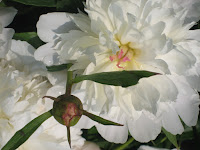
Heirloom peonies.
These beauties are 61 years old!


On top of the heat, the month was very wet. We had 2" more rain than the May average of 3.88". Nearly the entire monthly average (3.47") fell over just four days in the last half of the month. Central Ohio is famous for its humidity, but this year the heat coupled with the abundance of rain gave the place a tropical feel. May is the month in which garden and yard maintenance begin in earnest, and once, more than 5 years ago when temperatures were "normal", it was a really pleasant time to be outside working. In the recent past, it's become a challenge to do any sustained garden work; the month of May has become not so merry.
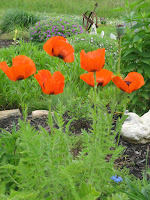
Poppies
Another thing that I've noticed the past five years is spring flowering plants--irises, peonies, fruit trees--aren't holding their blooms more than a very few days. I think this is related to the wild temperature fluctuations we've been experiencing in the winter months. Plants set buds as early as February that begin to mature, and then comes a freeze, then a warm-up, then another freeze. Last month, when abnormally frigid low temperatures occurred nightly for more than a week, a number of the peonies had already reached more than a foot in height and were topped with young leaves. Probably because of that battering, our peonies bloomed quite late, and then died within four days. Last year, after a too-warm February, the bearded iris grew too fast before the inevitable freeze hit-- not a single one bloomed.

This year, we lost all but two of a dozen lavender plants. I went to Baker's Acres today to try to find some replacements, but they were sold out. While there, I saw a bee gathering nectar from a coneflower, and I watched it a bit before I realized that in this vast perennial nursery, where everything was in flower, that was the only bee to be seen. It made me very sad.

I apologize for this grim blog. We seem to be surrounded by grim news now days, and it's very hard to not be sucked into the black hole of despair.

I hope the beauty of some nature photos can serve as a counter-weight.

Crabapple in bloom